
With the enhanced mandate, the technology organisation has also been consolidated under one leadership, and teams across Digital, SAP, IT Infrastructure, and Security will now report to Sandip Pradhan, CDIO, Century Plyboards.
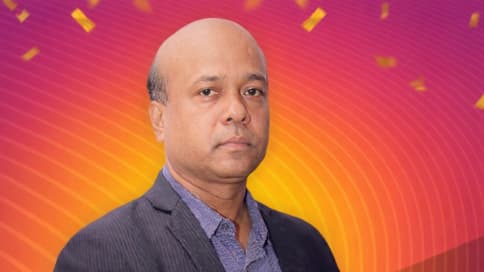
Sandip Pradhan, CDIO, Century Plyboards.
The Chief Information Officer (CIO) of Century Plyboards Sandip Pradhan is now the Chief Digital and Information Officer (CIDO). The extended set of responsibilities as a result of the role elevation is coupled with a dual reporting structure. Moreover, the technology organisation at the company has also been expanded resulting in more direct reports for Pradhan.
While the earlier role as a CIO was restricted in scope -- limited to and revolved around the technology function, as a CDIO Pradhan will now be accountable for building an operating model with digital as the baseline structure. As a CDIO, he will have to engage with a wider set of functions for smooth coordination.
Immediate Priority As CDIO
So what’s on the top of the mind of Sandip Pradhan as he takes over the CDIO role, “My first and most immediate priority is the successful stabilisation and rollout of SAP S/4 HANA, with the go-live planned in the first week of April 2026. This is a critical milestone because it will serve as the digital core and system of record for the enterprise, and it will set the foundation for all future transformation programs,” said Sandip Pradhan, CDIO, Century Plyboards, speaking exclusively to FE CIO.
Next on agenda will be the expansion of the digital canvas across the enterprise.“Once the core is stabilised, the next priorities will be to accelerate our broader digital transformation roadmap in a structured manner—strengthening enterprise data and analytics, improving integrated planning and execution visibility, enhancing partner and customer experience through digital platforms, and advancing intelligent operations across manufacturing and supply chain. All of this will be supported by strong cybersecurity, infrastructure readiness, and governance-by-design,” he said.
Dual Reporting Structure
Pradhan will measure his success as the CDIO not only by measuring the technology delivery milestones but, “by measurable business outcomes—such as faster and more accurate decision-making, improved operational efficiency, better partner experience, stronger process compliance, reduced risk, and the ability to scale digital capabilities confidently across the organization.”
With the elevation from CIO to CDIO at Century Plyboards, the reporting structure of Pradhan has been strengthened to reflect the organisation’s expanded digital agenda and enterprise-wide transformation priorities.
“Earlier, as CIO, I reported to the Chief Financial Officer (CFO). In my current CDIO role, I follow a dual reporting structure—for key areas including Digital Transformation, IT Infrastructure, and IT Security, I now report to our Executive Director, Nikita Bansal. For SAP and core enterprise application governance, I continue to report to the CFO, ensuring strong alignment between business priorities, financial discipline, and enterprise execution,” said Pradhan.
“With this enhanced mandate, the technology organization has also been consolidated under one leadership, and teams across Digital, SAP, IT Infrastructure, and Security now report to me. This structure enables faster decision-making, stronger governance, and a unified delivery model,” he said.
Mandate as CDIO
Going forward, the mandate as CDIO for Pradhan is to build a connected enterprise powered by a strong digital core, where technology becomes a business growth engine—not just a support function. The objective is to create one integrated digital foundation and a connected business ecosystem that enables synchronised planning, seamless execution, and faster decision-making across Century Plyboards.
As a result, Pradhan will have to also extend his engagement base.
“With this expanded mandate, I will engage more closely with a wider set of stakeholders beyond the traditional IT ecosystem. This includes deeper collaboration with the Promoters’ leadership, the Board, the Executive Director, CFO, business heads, plant and operations leadership, supply chain and planning teams, sales and channel leadership, HR, and key external transformation partners,” said Pradhan.
Empower your business. Get practical tips, market insights, and growth strategies delivered to your inbox
By continuing you agree to our Privacy Policy & Terms & Conditions