
The company reported its highest-ever claim settlement ratio of 99.29% in FY25.
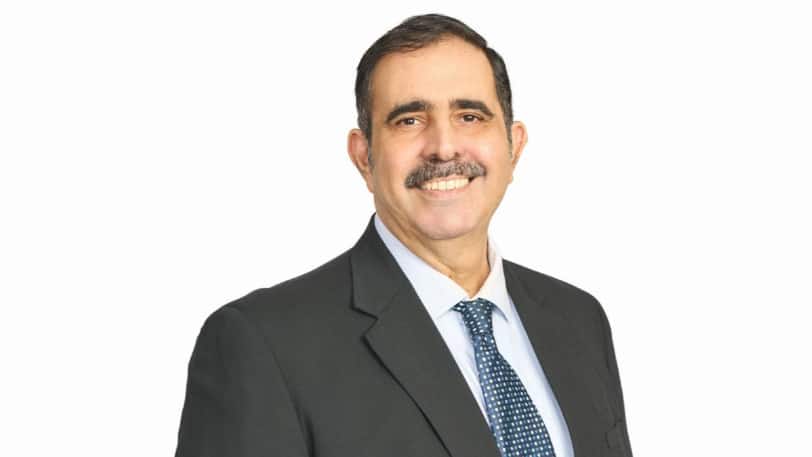
Kayzad Hiramanek, Chief Operations Officer, Edelweiss Life Insurance
Edelweiss Life Insurance reported its highest-ever Claim Settlement Ratio of 99.29% in FY25. The claim settlement ratio measures the percentage of death claims paid out versus total claims received, serving as a key indicator of an insurer's reliability and commitment to policyholders.
Over the last 5 years, the company has focused on strengthening its claims performance by focussing on advanced technology integration, streamlined back-end processes, empathetic customer service and transparent communication. FE CIO speaks with Kayzad Hiramanek, Chief Operations Officer (COO), Edelweiss Life Insurance, about the company's digital transformation journey over the past five years.
Edited Excerpts:
Edelweiss Life Insurance recently registered a claims settlement ratio the upwards of 99 percent. What technology have you built over the years to make this happen seamlessly?
Five years ago Edelweiss Life Insurance undertook project ‘Udaan’. It focused on creating a connected ecosystem that catered to the customers digitally with three specific pillars – Customer experience and customer convenience; distributor convenience and experience, and personalization.
We launched the office in a box, MyZindagi app, for the distributor. It caters to every aspect of his work -- from getting onboarded to training, lead generation and any updates related to his account. The supervisor can track the distributor’s progress, from whom the MyZindagi app is virtually the office that resides on the mobile phone.
This journey is now at its completion and we are reaping the benefits of that hard work that we did between 2020 and 2024.
Secondly, on the personalization front we designed a platform -- ‘U-Unlimited’ (U2) for the distributors. It basically charts the long-term planning for the customer in the form of recommendations based on the basic details of the prospects and the leads after doing the need analysis and requirements. These recommendations are customized based on the needs and aspirations of the customers.
The company can pre‑profile leads using backend models and predictive analytics to assess customer profiles, risk levels, and likely payment behaviour.
When the prospect converts to a lead and finally to an actual application, the system puts the profile before a rules engine running at the backend. It is exposed to the various public databases like the account aggregators, UIDAI, credit bureaus, etc. The connected system following the parameters set in the rule engine does the match and underwrites the application on the fly after which policies can be issued in a matter of minutes.
How has the Saksham platform enabled seamless, end-to-end customer engagement and driven superior outcomes across the insurance policy lifecycle, including claims?
The customer service platform called Saksham, serves as an end-to-end system and represents the moment of truth for the customer across the entire policy lifecycle, including claims.
Through Saksham, I have a deep understanding of my distributor—specifically, the nature of conversations the distributor has had with the customer and the recommendations generated by the system. This allows me to establish right selling. Since I already know my customer, I have pre-profiled them and completed the necessary integrations to understand their financials comprehensively.
As a result, I have the ability to issue policies on the spot and service customers effectively, based on the information already captured. Saksham enables me to build strong relationships through both digital and physical touchpoints, ensuring continuity and consistency of engagement.
Ultimately, insurance is purchased for a specific moment in life—either good fortune or misfortune. In the case of good fortune, such as planning for a child’s education, the customer may want the policy payout when the child is in the 10th or 12th standard. The challenge is to ensure timely payments without repeatedly asking the customer to redo KYC or resubmit bank details. With Saksham, all of this is already pre-completed.
In the unfortunate event of a claim, such as the death of the policyholder, the platform enables immediate identification of the rightful claimant and swift claim settlement. This capability is the direct outcome of the extensive effort over the past five years to digitise processes and create a fully connected ecosystem.
To illustrate the impact, last year Edelweiss Life received around 560 claims and successfully settled 556 of them, resulting in a claims settlement ratio of approximately 99.29%. At the same time, my Net Promoter Score (NPS) has moved from the mid-50s to ~70s. This improvement is driven by our ability to truly know the customer, interact with them through their preferred channel, at their chosen intervals, and ensure they receive their money exactly when they need it.
What kind of data infrastructure has been built by Edelweiss Life Insurance ?
We have worked very hard to get our structured data together on the platform called the Dataverse. Typically in most life insurance companies, they have legacy systems spread over multiple decades. The data generated in them is stored on different systems.
We consolidated our data on one platform and called it ‘dataverse’ which allows us one moment of truth across the organisation, across all touch points, including my distributor data -- his logins or issuances, etc. Similarly, the customer life cycle related data, the data regarding reporting to the regulator because it’s a rigorous reporting that happens monthly, quarterly, and annually, all of that is extracted from Sakshamonly because it is available in a structured format and from a single source.
As a result, our ability to run predictive models to financially, medically profile the customer gets a lift. Similarly the company can profile its distributor, individual agents and even employees using the platform.
Through the data and the integrations, our employee onboarding is completely paperless. Most employees are delighted to know they have joined an organisation where people know them even before they have joined. Typically, the first day is spent only on doing the paperwork. This is not the case at Edelweiss Life.
In creating the risk profiles too, data assists in not overly investigating and troubling the prospects. With the available data, the company is able to infer precisely the kind of profiles that can prove to be the right fit. This empowers us in taking decisions on the fly. It also aids the distributor in selling seamlessly and the customer in terms of getting on boarded without any hassles and servicing himself seamlessly across platforms.
What is the level of AI integration in the underwriting systems at Edelweiss Life ?
The crux of insurance is about good quality financial, medical underwriting and looking at all risk vectors before onboarding the customers.
We have standardised profiles and run AI models in collaboration with our reinsurer. As the insurer’s insurer, the reinsurer has a much broader view of industry trends and risk patterns, so integrating with them strengthens our overall risk profiling.
Additionally, AI‑enabled underwriting taps into databases such as the Insurance Information Bureau (IIB) to check if a profile has filed claims elsewhere or has been rejected by another insurer. This information is integrated into our dataverse, enabling much faster and more seamless decisions.
For customers on the fringe—those who broadly meet our criteria but show certain aberrations—AI‑led underwriting guides the way forward without over‑investigating or inconveniencing the prospect.
Even when customers lack a digital footprint or are buying insurance for the first time, AI helps us profile them appropriately by analysing similarities with other customers, the product being purchased, ability to pay, and likely payment behaviour. These datapoints were earlier scattered across the ecosystem, but we have consolidated them to support more accurate, confident decisions.
What’s the tech ecosystem running at the backend to seamlessly service claim settlement ?
Eventually the moment of truth is the claims settlement, whether it is in terms of a death claim or in maturity of the policy. We are one of the most tightly run tech ecosystems in the insurance sector. The attempt has been to keep the tech infrastructure at its lowest. So, ~75% percent of our applications and other manifestations are on the cloud. The partners we work with not only have a deep understanding of the insurance ecosystem but are also compliant from a regulatory standpoint.
Our partners have integrated diverse systems such that at the front end it is a seamless experience for the distributor, customer, and the regulatory functions. The integration has been done to the point that the company doesn't need to have an army of people generating MIS to close the month end, quarter end, year end. At the same time, it largely reduces the need for the distributors to ask for extra information or extra collateral. It also saves the customers from the discomfort of providing various documents at the last moment.
Empower your business. Get practical tips, market insights, and growth strategies delivered to your inbox
By continuing you agree to our Privacy Policy & Terms & Conditions