
Narayana Health has invested heavily in systems that provide real-time access to patient vitals, diagnostics, and care updates, whether the doctor is in the ICU or accessing the system remotely.
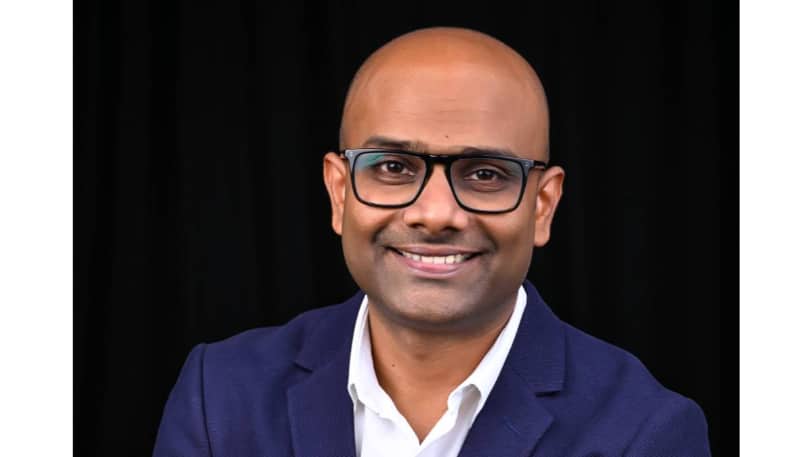
Jagadeesh Ramasamy, Chief Digital Officer (CDO) & Chief Information Officer (CIO), Narayana Health
One of the biggest hospital chains in India, Narayana Health, primarily delivers tertiary (requires specialised care) and quaternary care (requires super specialised health solutions).
However in the post-COVID era, the Devi Shetty-owned Hospital chain has expanded rapidly into primary and secondary care too. More clinics have been opened having a separate membership, more long-term, association-driven engagement,thereby giving rise to the ‘One Health’ concept within Narayana. The goal was to move upstream into more preventive and long-term association with the patients.
Narayana Health Insurance has also received its license to operate as a standalone health insurance company from the IRDAI (Insurance Regulatory and Development Authority of India) in January 2024.
FE CIO caught up with Jagadeesh Ramasamy, Chief Digital Officer (CDO) & Chief Information Officer (CIO), Narayana Health, to know more about the company’s digital plans.
Edited Excerpts
What’s the intention behind Narayana Health entering into the health insurance space and how will digital empower the company and benefit the patients ?
One of the biggest problems in health insurance is that many insurance companies may not know the risk profile of their customers because it's an elaborate process to assess member risk continuously over long periods of time. So when events like COVID happen, the claims increase and then it gets passed on to all the customers equally. Post-COVID, all insurance premiums have almost doubled or tripled in some cases.
We as a healthcare organization have the infrastructure to monitor member health on a continuous basis. Our idea is that by using tech, we can pass on the benefits to members, who are maintaining their health better, back to them.
How has your tech ecosystem and onsite–offshore model changed day‑to‑day operations in the Cayman Islands and the UK, and what key lessons are you carrying forward?
Narayana is now expanding to other countries. We've been operating in the Cayman Islands for more than a decade now and recently we acquired a group of hospitals in the UK. So, a lot of this is driven by the efficiency and ability for us to run such facilities even overseas more efficiently than the competition, which has been possible due to the tech ecosystem that we created.
We've been able to create an effective onsite-offshore mix for Cayman Islands due to technology. Not everybody needs to be in the hospital onsite. You need to have qualified people onsite. When it comes to the back office operations, technology enables us to have an optimal mix of manpower onsite and offshore. In some cases we have completely automated the processes and eliminated the manpower.
We’ve been present in the Cayman Islands for over a decade, where our first facility has seen tremendous success. Building on that momentum, we’ve recently opened a second hospital there. This expansion reinforces our belief that high-quality healthcare can be run efficiently when supported by the right systems.
Our ability to run international operations, whether in the Cayman Islands or through our recent acquisition of a hospital group in the UK, is underpinned by a robust tech ecosystem. By rethinking traditional workflows and embracing smart automation, we’ve streamlined clinical and administrative processes alike.
Our approach is not about relocating tasks, it’s about reimagining how healthcare operates, using innovation to enhance care delivery, optimize resources and scale impact globally.
You also run a good part of the IT infrastructure built in-house, including the core Electronic Medical Record (EMR) system. Please throw more light on this.
The core of any healthcare provider is the Electronic Medical Record (EMR), or Hospital Information System (HIS) system as it is known in India. We have built it on our own.
We have a 250 member strong team, like a reasonably big tech startup running inside the healthcare organization. We have two teams -- Athma and Medha. Athma is the EMR HIS backbone and the associated automation applications, products that are required for a hospital are built around that ecosystem.
Medha is our analytics and AI platform. These two teams have been working for close to nine to ten years. Built from scratch, we have complete autonomy over these tech platforms. Over and above these, other applications have also been built inhouse.
We have invested heavily on specific healthcare products and are in a way an exception compared to our peers. Of course, a lot of big hospital chains have their development teams but most of them take an existing product off the shelf and customize it. Then there are ones, who have built their own products and have not taken it beyond their parent organization. They are largely captive. In that respect, we are an exception in the sense that we not only serve our own organisation but have customers beyond Narayana in India, who use the same solution and also partners outside India, in the Middle East, Africa and Southeast Asia. They are also using Athma and Medha.
What are some of the recent initiatives you have undertaken ?
I will split it into three parts. Operational, patient and clinical.
In operations, some major initiatives that we have recently launched and seen a good amount of traction are in the area of shared services. Similar to an onsite-offshore mixture, in India also, we have a mechanism where we distribute the workload across multiple locations. We have operations in 20-plus locations in India.
Under the shared service ecosystem, the workload gets distributed and people can pick up any specific work related to any other unit also and execute it. Accordingly, we are able to efficiently distribute the workload in finance and accounting for better utilization of the resources. That is one initiative where we have significantly reduced turnaround times in some back office work like invoice processing and validation, etc.
Similarly, on the procurement side, we have home-built Auto Goods Received Note (GRN) capability that we have recently introduced, which is having a success rate of more than seventy percent. We have Optical Character Recognition (OCR), which reads the invoices that come from the vendors and prepares the GRN directly in Athma.
There is no manual intervention. Only the physical goods verification is done by the team. This has brought in significant reduction in TATs to ensure drugs and consumables reach patients on time.
What kind of digitisation has been done on the patient side ?
On the patient side, we launched our Point-of-Service (POS) application at the end of last year (2024), and now it accounts for almost 40 percent of all our appointments booked. Basically, it has removed a lot of queuing in the front office area and also the counters that are needed to handle patients. In most hospitals, patients or their associates stand in a queue to pay the money, choose a doctor, book an appointment, etc. We have made it fairly self-service-oriented for the patients. We already have a very strong patient app ecosystem also, so people can book appointments before they come to the hospital, but this facility is for those who walk into the hospital without any pre-booking. We get close to 60 percent walk-ins on an average across our hospitals. For those, the POS has gone a long way.
In one of our hospitals the number of counters has come down from ten to two, and the goal is to make it to one. The reason why we still need one counter is because some patients prefer to pay in cash, and we need a counter to collect it. But all the UPI transactions or card transactions have been moved to the kiosk. Overall, in the last couple of quarters, this service has received a good response -- around 70 to 80 percent, depending on the hospital, where patients do the booking themselves. Basically, they either do it on the app, website or the kiosk. They don't have to queue up at the counter.
In terms of our app installs, Narayana Health has one of the largest install bases for a hospital app. The app has 3.5 million installs with close to 300,000 monthly active users (MAUs). So, this helps in creating that ecosystem where patients can get in touch with the hospital and can do a number of tasks on their own without having to physically call the contact centre or reach our clinic or hospital.
How have doctors been empowered with digital tools ?
At Narayana Health, we have taken significant strides on the clinical side of healthcare, an area that often receives less focus when it comes to technology investment.
In many healthcare systems, tech investments tend to concentrate on either end of the patient journey. The front end typically involves CRM tools that drive business metrics such as lead tracking and conversion. The back end focuses on revenue cycle management, billing, claims, collections, and so on. While these are important, the critical phase in between, where most patient interactions and clinical decisions occur, often doesn't receive the same level of attention from leadership, especially when evaluating ROI.
This is understandable. Unlike administrative tools, investments in clinical quality, patient safety, or decision support systems don’t always yield immediately measurable financial returns. Yet, these areas are fundamental to delivering better outcomes and building long-term trust.
At Narayana Health, we've made a conscious decision to prioritise technology that empowers our clinicians and enhances patient safety. We’ve invested heavily in systems that provide real-time access to patient vitals, diagnostics, and care updates, whether the doctor is in the ICU or accessing the system remotely. This approach ensures informed decisions are made faster, and patient care is consistently of the highest standard.
Can you deep-dive on how the various clinical processes are being integrated with technology to serve the patient better ?
One of the persistent challenges in healthcare is the limited time doctors have to make critical decisions during routine patient visits. Typically, in the ward a doctor might see a patient once or twice a day. In those brief five to ten minutes at the bedside, they’re expected to absorb everything that has transpired since their last visit, from lab results and medication changes to nursing notes and vital signs and make informed decisions on treatment plans, dosage adjustments or interventions. It’s an enormous responsibility compressed into a narrow window of time.
To address this, we've reimagined how care teams stay connected and informed, turning episodic check-ins into continuous engagement through our Doctor App.
With this system, care is no longer the sole responsibility of a single doctor. Each patient is supported by a dedicated team, including surgeons, assistants, intensivists, and specialists who are all brought into a secure, collaborative environment. The app functions like a real-time, context-aware chat platform, where each patient becomes the anchor for communication. Any updates, lab reports, radiology scans, clinical notes are automatically posted to the patient’s group thread, ensuring that all team members have instant visibility into the patient’s evolving condition.
This shared, real-time awareness means more eyes are on the patient, increasing the chances of catching changes early. It also enables immediate action, if a patient’s vitals deviate from safe ranges, the doctor can update medication orders directly through the app, prompting the nursing team to respond without delay.
But the system isn’t only reactive, it’s also proactively intelligent. Narayana Health has nearly 20 years of patient data, which we’ve used to train machine learning models that analyse patterns across over 50 clinical parameters. These models generate risk scores that help doctors identify high-risk patients early, often before symptoms become critical. This predictive insight allows for timely interventions, improved outcomes, and more efficient resource allocation.
In essence, we’re combining real-time collaboration with data-driven foresight, giving our clinical teams the tools they need to deliver safer, smarter, and faster care.
Building on the success of our Doctor App, we’ve recently introduced a companion platform tailored for nursing teams, the Nursing App.
One of the longstanding challenges in healthcare is the sheer volume of documentation nurses are required to complete. While much of this paperwork is essential, a large portion ends up being underutilised. The reality is, the volume is often so overwhelming that critical insights can get buried in forms and registers that few, if any, have the time to thoroughly review.
Our goal was twofold: eliminate the burden of paperwork and transform documentation into meaningful, actionable data. By moving nursing records into a fully digital ecosystem, we’ve not only improved efficiency but also made the information intelligent, organized in a way that directly supports clinical decision-making.
The impact has been significant. At one of our hospitals, we were able to eliminate nearly 75 percent of all manual nursing forms and registers. This same hospital recently underwent a Nursing Excellence Audit, notably, the first time such an audit was performed on a fully digital platform. The result: zero non-compliances and no adverse observations.
This is more than a technological upgrade. It’s a validation of how thoughtfully designed digital systems can streamline workflows, reduce administrative burden, and uphold the highest standards of care.
At Narayana Health, we manage the majority of our diagnostics in-house, conducting over 10 million tests annually across our network.
To handle this scale efficiently, we’ve heavily invested in automation and process optimization within our laboratories. Since early 2023, we’ve rolled out streamlined workflows and intelligent systems that have significantly improved turnaround times, particularly for high-volume investigations. In many cases, we've been able to cut turnaround time by half.
What’s especially encouraging is that even in 2025, despite a 23 percent increase in diagnostic volumes, we’ve been able to sustain, and in some cases improve, our operational efficiency. This is a direct result of a disciplined focus on continuous improvement and leveraging technology to manage complexity without compromising accuracy or speed.
Empower your business. Get practical tips, market insights, and growth strategies delivered to your inbox
By continuing you agree to our Privacy Policy & Terms & Conditions