
Tata Steel, one of India’s biggest steel manufacturers, has set up a comprehensive AI ecosystem that is used in the entire value chain of steel manufacturing.
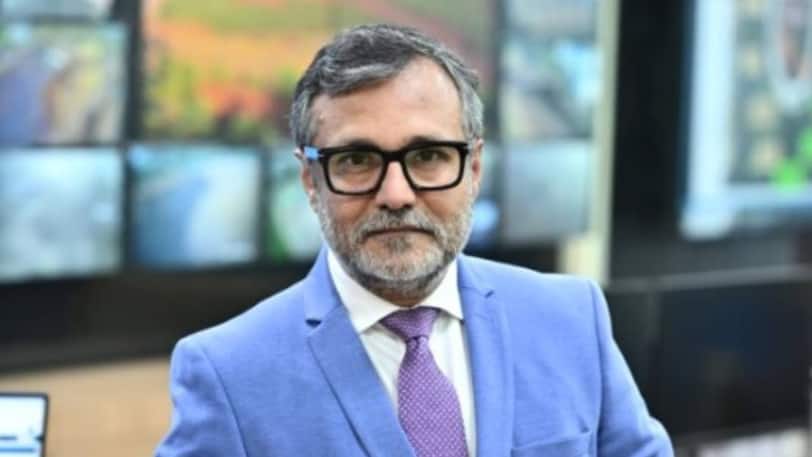
Jayanta Banerjee, Group CIO, Tata Steel
Tata Steel’s 78 percent steel production happens at manufacturing sites, certified by the Lighthouse Network, a World Economic Forum (WEF) initiative. As many as three manufacturing sites of Tata Steel have been included in the Lighthouse Network. It acknowledges and recognises manufacturing sites globally that have delivered business outcomes with 4th Industrial Revolution (IR) technologies, which among other technologies also include Artificial Intelligence (AI).
Tata Steel, one of India’s biggest steel manufacturers, has set up a comprehensive AI ecosystem – both at the Narrow AI (mathematical models working on structured data) and Generative AI level -- most of it is designed and built inhouse. The company runs 650 AI models globally. All of them are used in the entire value chain of steel manufacturing – from raw material sourcing to final delivery to the customer.
Digital Foundation Behind AI
Any purposeful AI platform should have a deep digital backbone, “Digital or AI are in the same continuum, but AI looks at the other end of the tunnel and digital is this end of the tunnel,” says Jayanta Banerjee, Group CIO, Tata Steel.
The company has set up ‘Digital Twins’ of the mines and the manufacturing plants, which can then be handled remotely. “We have created digital twins for our operations. In Jamshedpur we are supervising and controlling the mines, which are 350 to 400 kilometers away. The mines are in Jharia, Noamundi, West Bokaro, etc,” says Banerjee. “By the government rules of safety, you have to have physical supervision—but the entire data, video, voice, operations, can actually be supervised and controlled from the remote location i.e from the Integrated Remote Operations Control Tower.” This is in addition to an on-site team handling the operations.
AI At The Integrated Remote Operations Control Tower
The AI running on top of the data from the sensors at the control tower helps the operator in uninterrupted running of machines unless there is a need for its maintenance, “It's a big center. The excavations can be controlled from there. You can actually see how the groundbreaking is happening, how the logistics are moving, and how the mines are operating..”
Our sinter plants (makes the process of steel making more efficient) are running from a remote location. The entire agglomerate business (combining small particles into big chunks for steel production) and the coke plant (fuel used for steel making) is remote. It has four chapters: Coke Plants, Agglomerate, Mining, Integrated Maintenance Excellence Center. The fourth chapter is the brain of maintenance. We have moved from condition-based, time-based maintenance to predictive and prescriptive. The data from all equipment through sensors comes there, AI algorithms run on top of it, and then we can make decisions. We don't need to ground the machine unless it really needs to be grounded,” said Banerjee.
The Scale of AI Models
Any malfunctioning or disruption in the AI models will have a direct bearing on the entire value chain of steel making, saysBanerjee, “There are 550 AI models running in India. And there are an additional 100 running in my European operations. About 650 models running globally. If I stop any of these models, my operations will be impacted right from my raw material sourcing to the inbound logistics, to the furnace ingestion, to the furnace output, to the steelmaking ingestion. The models are running across the value chain, whether it is chemistry, metallurgy, logistics or the cost is being optimised from a price standpoint or price is being predicted.”
The essence behind the rigorous need for monitoring the mines and plants is because of the physics and chemistry that lies behind the process of steel manufacturing.
“For instance if there is a blast furnace that is being monitored remotely, billions of parameters of chemistry operating in the background can be automated. We have chemical sensors, temperature reading sensors, color sensors to see whether it is in equilibrium or outside of equilibrium. If we see the model sensing it going outside the equilibrium, it can tell the operator to increase the vibration, increase the speed, or reduce that parameter. The operator takes the final call. To put it in autopilot mode, it has to go through a lot of training cycles and failure modes,” Banerjee says.
This is only the Narrow AI application at Tata Steel.
Inhouse Generative AI Design, The Tata Steel Way
Tata Steel was one of the early adopters of Generative (GenAI) in early 2023. Tata Steel’s strategy to capture the intelligence of AI models was to get the inference from their data using the external AI system from outside the Tata Steel's systems, without the data or the intelligence created out of it leaving the company’s IT premises.
“The first thing we decided is that we will not be able to export data because data is our core business asset. So we have to use the models, but then how do I bring the model into my ecosystem? That is where the architecture comes in, and that is the innovation that we have,” says Banerjee.
Explaining the innovation, he says, “Without exporting data outside, can I use my models on data which is on my private or public cloud. can i bring the model instance come to my estate behind the firewall, do the processing on my data, leave the inference to me, and go out of my ecosystem. So the inference is my property. The model does not return anything. It goes out, but the inference in the data remains with me. What I get is that I give it the data, I get the inference without my data leaving my premises. Extremely important for Generative AI. If you do not do that, your core IP data is outside of the premises and then your IP is gone.”
This tool – Tata Steel Digital Assistant – can be given to every employee in the company.
GenAI Use cases:
Physical safety at plants
Human safety always takes precedence. The first use case was adopted in the area of physical safety at plants and mines at Tata Steel. Tata Steel operates thousands of cameras at its locations. It keeps a watch and identifies the deviations from the set policies.
“We have 11,000–12,000 cameras in the company. They are watching. All static image or video—it generates the text in a prescribed format completely, automatically highlighting the variation/deviation from the policy and then creates the policy document.In the same way, I have an ID card which is sensor-enabled. If I am in a hazard zone without the right training or permit, or if I am not wearing the right harness, it will tell me I'm doing a dangerous maneuver,” says Banerjee.
Manufacturing Defects
GenAI is able to read defect data and do pattern matching. Even if there is a lot of dust, GenAI is so good in imaging it has been able to solve the dust issue.
Healthcare
Tata Steel runs a hospital and Gen AI is being used in scanning through the patient’s case history. The doctor can securely go through all the history files of a diabetic patient, for example. The AI has read all the literature of that patient automatically and created a progression profile – this person has had this ailment for so many years, the medicine has been taken, the disease might progress or be well controlled. The productivity increases, and human error is taken away because it can read so much literature.
Customer Complaint Management
The Customer Complaint Management is non-structured data. A customer is unhappy—they might shout, write an email, call an account manager, or just return the product. All of it can be handled through an AI-based agent.
“We take all the multivariate inputs, and we process: What kind of problem is it? Is it quality, Dispatch, Logistics delay, Wrong order?. It auto-classifies and sends it to the respective agencies in the supply chain so they get it in real-time. They don't have to wait 21 days. We are now trying to create a Customer Agent (still in development) where a customer can interact with this agent directly,” informs Banerjee.
Manufacturing Excellence & Cost
The MD chairs the cost meeting—the most important of all meetings in the company to discuss the cost involved in manufacturing. Banerjee says, “The meeting is TDA enabled. It will do a hot metal analysis, deviation analysis, dispatch cost analysis. It will do all the insights and cull out those three, four, or five important decisions to be taken in the meeting before the meeting. The presentation itself is automated.”
Logistics: Driver Fatigue Management
For the huge Komatsu trucks, Tata Steel has implemented a fatigue management system. It looks at the driver’s eye retina. If the driver is sleepy, it buzzes in real-time.
Generative AI picks up this data and creates insight: Is this driver not sleeping? Is he running a double shift? Has he come from a supplier who has possibly done a double shift? Is it happening only between this time and that time?.
Empower your business. Get practical tips, market insights, and growth strategies delivered to your inbox
By continuing you agree to our Privacy Policy & Terms & Conditions